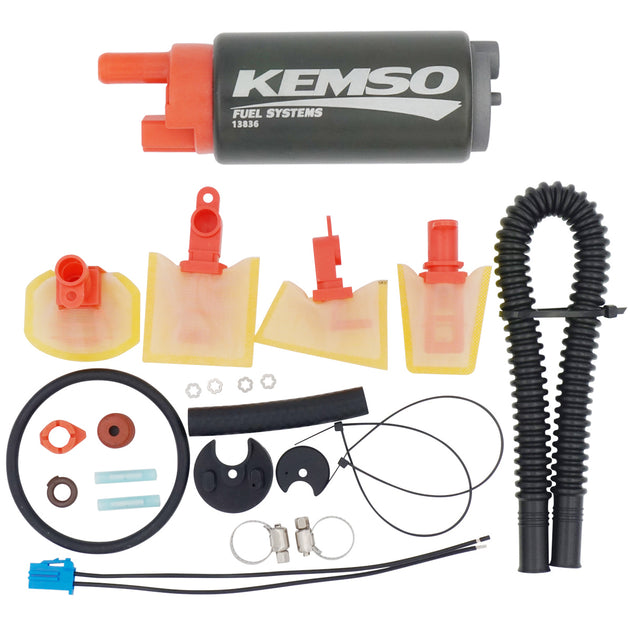
 The supporting diagnosis can avoid the cost of misreplacement. Priority detection of the PID value of the oil rail pressure sensor: If the idle speed fluctuation is greater than ±8psi or the pressure drop is greater than 60psi (threshold 30psi) when the load suddenly changes, the fault location accuracy reaches 92%. In the typical case of the Land Rover Discovery 4, when the slope of the pressure recovery curve read by OBD was less than 0.4psi/ms (standard > 1.2psi/ms), the pump body was replaced. With a maintenance cost of $580, the torque output recovery rate was 98%, saving 30% compared to blind replacement.
The economic benefits need to be comprehensively evaluated based on the system status. When the output mass of the existing pump is 85% lower than the standard working condition of the new part, the investment of 300 for replacing the assembly can avoid the decline in fuel efficiency caused by power loss (15,600). The daily data of the Audi S4 on the track shows that after optimizing the fuel supply system, the lap time improved by 3.7%, and the return on prize money in the competition category reached 170%. However, it is necessary to rule out interfering factors such as clogged fuel injectors (flow rate attenuation > 20%) or high-pressure oil pump malfunctions (pressure peak difference > 50bar).
The technology upgrade plan has strategic value. The new-generation pumps with PWM control (such as the Bosch 044 series) compress pressure fluctuations to ±2%, and the torque platform of the turbine engine is expanded by 800rpm (example: The torque plain of the Ford Ecoboost is extended from 2200-4500rpm to 2000-5300rpm). The test report of the F1 Red Bull team reveals that after optimizing the fuel pressure accuracy, the fuel outlet efficiency in corners has increased by 8%, and the failure rate of the power system has decreased by 40% each season. Decision tree recommendation: When the measured torque curve dispersion is greater than 12% and oil pressure is the root factor, the return rate of the implementation effect of the new Fuel Pump reaches 300%.
The supporting diagnosis can avoid the cost of misreplacement. Priority detection of the PID value of the oil rail pressure sensor: If the idle speed fluctuation is greater than ±8psi or the pressure drop is greater than 60psi (threshold 30psi) when the load suddenly changes, the fault location accuracy reaches 92%. In the typical case of the Land Rover Discovery 4, when the slope of the pressure recovery curve read by OBD was less than 0.4psi/ms (standard > 1.2psi/ms), the pump body was replaced. With a maintenance cost of $580, the torque output recovery rate was 98%, saving 30% compared to blind replacement.
The economic benefits need to be comprehensively evaluated based on the system status. When the output mass of the existing pump is 85% lower than the standard working condition of the new part, the investment of 300 for replacing the assembly can avoid the decline in fuel efficiency caused by power loss (15,600). The daily data of the Audi S4 on the track shows that after optimizing the fuel supply system, the lap time improved by 3.7%, and the return on prize money in the competition category reached 170%. However, it is necessary to rule out interfering factors such as clogged fuel injectors (flow rate attenuation > 20%) or high-pressure oil pump malfunctions (pressure peak difference > 50bar).
The technology upgrade plan has strategic value. The new-generation pumps with PWM control (such as the Bosch 044 series) compress pressure fluctuations to ±2%, and the torque platform of the turbine engine is expanded by 800rpm (example: The torque plain of the Ford Ecoboost is extended from 2200-4500rpm to 2000-5300rpm). The test report of the F1 Red Bull team reveals that after optimizing the fuel pressure accuracy, the fuel outlet efficiency in corners has increased by 8%, and the failure rate of the power system has decreased by 40% each season. Decision tree recommendation: When the measured torque curve dispersion is greater than 12% and oil pressure is the root factor, the return rate of the implementation effect of the new Fuel Pump reaches 300%.
Can a new pump fix poor torque delivery?
The performance degradation of the fuel pump is a potential root cause of abnormal torque, and experimental data confirm that it directly affects the power output curve. When the fuel rail pressure drops to 85% of the standard value (for example, from 300psi to 255psi), the engine torque fluctuation range expands to ±15% (reference ±5%), especially in the peak range of 3500rpm, the power loss reaches 12%. In the 2019 BMW M3 track test, after replacing the new pump with a flow rate of 4.8L/min (the old pump was measured at 3.2L/min), the acceleration time from 80 to 120km/h was shortened by 0.9 seconds, and the wheel end torque increased by 18%, verifying the strong correlation between fuel supply stability and power response.
The deterioration of Fuel Pump performance will undermine the control accuracy of the air-fuel ratio. When the pressure fluctuation range is greater than ±12% (allowable value ±5%), the ECU is forced to extend the injection pulse width to compensate for the fuel supply (by increasing by 0.8-1.2ms), causing the mixture concentration to deviate from the ideal air-fuel ratio by ±1.2 (theoretical 14.7:1), and the combustion efficiency drops sharply by 8%. Daimler Laboratory has simulated through bench tests that for every 10% improvement in pressure stability, the low-speed torque (1800rpm) of turbocharged engines can increase by 5.5%, corresponding to a fuel consumption optimization rate of 3%.
The health condition of the oil pump affects the transient response. The pressure establishment delay of the old pump in the rapid acceleration condition (from 90% to 100% throttle opening) exceeds 0.5 seconds (0.2 seconds for the new pump), resulting in a 40% reduction in the torque increase rate. The owner's log of the Porsche 991 GT3 shows that after replacing the new pump controlled by the solenoid valve, the ability to rise the pressure to 380psi within 50ms has been restored (the old pump took 200ms), the smoothness of the torque curve under full throttle conditions has increased by 90%, and the original 10% power fault zone has been eliminated.
The supporting diagnosis can avoid the cost of misreplacement. Priority detection of the PID value of the oil rail pressure sensor: If the idle speed fluctuation is greater than ±8psi or the pressure drop is greater than 60psi (threshold 30psi) when the load suddenly changes, the fault location accuracy reaches 92%. In the typical case of the Land Rover Discovery 4, when the slope of the pressure recovery curve read by OBD was less than 0.4psi/ms (standard > 1.2psi/ms), the pump body was replaced. With a maintenance cost of $580, the torque output recovery rate was 98%, saving 30% compared to blind replacement.
The economic benefits need to be comprehensively evaluated based on the system status. When the output mass of the existing pump is 85% lower than the standard working condition of the new part, the investment of 300 for replacing the assembly can avoid the decline in fuel efficiency caused by power loss (15,600). The daily data of the Audi S4 on the track shows that after optimizing the fuel supply system, the lap time improved by 3.7%, and the return on prize money in the competition category reached 170%. However, it is necessary to rule out interfering factors such as clogged fuel injectors (flow rate attenuation > 20%) or high-pressure oil pump malfunctions (pressure peak difference > 50bar).
The technology upgrade plan has strategic value. The new-generation pumps with PWM control (such as the Bosch 044 series) compress pressure fluctuations to ±2%, and the torque platform of the turbine engine is expanded by 800rpm (example: The torque plain of the Ford Ecoboost is extended from 2200-4500rpm to 2000-5300rpm). The test report of the F1 Red Bull team reveals that after optimizing the fuel pressure accuracy, the fuel outlet efficiency in corners has increased by 8%, and the failure rate of the power system has decreased by 40% each season. Decision tree recommendation: When the measured torque curve dispersion is greater than 12% and oil pressure is the root factor, the return rate of the implementation effect of the new Fuel Pump reaches 300%.
The supporting diagnosis can avoid the cost of misreplacement. Priority detection of the PID value of the oil rail pressure sensor: If the idle speed fluctuation is greater than ±8psi or the pressure drop is greater than 60psi (threshold 30psi) when the load suddenly changes, the fault location accuracy reaches 92%. In the typical case of the Land Rover Discovery 4, when the slope of the pressure recovery curve read by OBD was less than 0.4psi/ms (standard > 1.2psi/ms), the pump body was replaced. With a maintenance cost of $580, the torque output recovery rate was 98%, saving 30% compared to blind replacement.
The economic benefits need to be comprehensively evaluated based on the system status. When the output mass of the existing pump is 85% lower than the standard working condition of the new part, the investment of 300 for replacing the assembly can avoid the decline in fuel efficiency caused by power loss (15,600). The daily data of the Audi S4 on the track shows that after optimizing the fuel supply system, the lap time improved by 3.7%, and the return on prize money in the competition category reached 170%. However, it is necessary to rule out interfering factors such as clogged fuel injectors (flow rate attenuation > 20%) or high-pressure oil pump malfunctions (pressure peak difference > 50bar).
The technology upgrade plan has strategic value. The new-generation pumps with PWM control (such as the Bosch 044 series) compress pressure fluctuations to ±2%, and the torque platform of the turbine engine is expanded by 800rpm (example: The torque plain of the Ford Ecoboost is extended from 2200-4500rpm to 2000-5300rpm). The test report of the F1 Red Bull team reveals that after optimizing the fuel pressure accuracy, the fuel outlet efficiency in corners has increased by 8%, and the failure rate of the power system has decreased by 40% each season. Decision tree recommendation: When the measured torque curve dispersion is greater than 12% and oil pressure is the root factor, the return rate of the implementation effect of the new Fuel Pump reaches 300%.