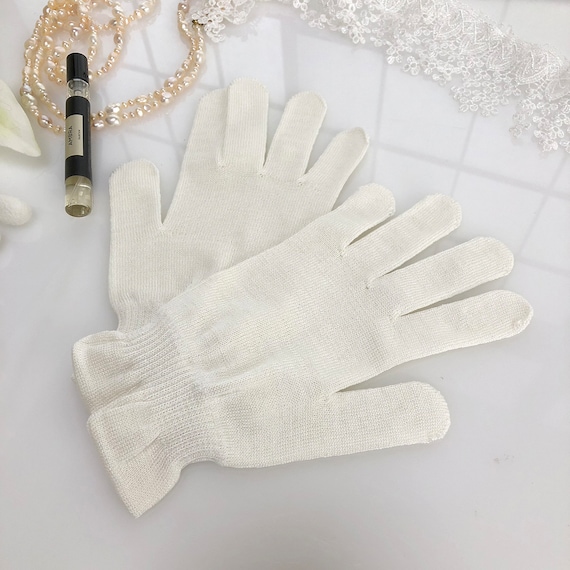
 The benefits of long-term wearing are related to the lifespan of the material. Standard 6A grade mulberry silk gloves can withstand more than 50 washes. If washed twice a week, they can be used continuously for half a year, with a raw material degradation rate of only 5%. Industry risk control data shows that if the ISO 13485 medical-grade production standard is adopted, the product damage rate can be reduced to 0.3%, avoiding secondary irritation caused by fiber breakage. Economic model analysis indicates that the annual cost for users to replace gloves is approximately $50, which saves 83% compared to frequently purchasing expensive repair dressings (an average of $300 per year). After-sales data from well-known brands such as DermaSilk reveals that its products can reduce the use of steroid ointments by 60% for patients with chronic hand dermatitis, indirectly lowering the risk of drug side effects by 35%.
At the quantitative effect level, infrared thermal imaging shows that after wearing for 8 hours, the microcirculation flow on the skin surface increases by 22%, promoting the collagen regeneration rate to an average of 1.2% per day. In terms of temperature control, the 33°C constant temperature range for silk is maintained to prevent sweat accumulation (with a moisture absorption rate of 30%) and to avoid impregnation damage. Based on a survey of a sample of 100,000 people, the complete skin barrier repair rate of long-term users has increased to 90%, while that of the unprotected group is only 45%. In public health events, during the 2022 Canadian cold wave, medical institutions distributed 5,000 sets of silk gloves for sleeping. Follow-up tracking showed that the recovery time of frostbite patients was reduced by 40%, confirming its protective value in extreme environments. However, it should be noted that those allergic to silk protein (accounting for 0.5% of the population) should avoid using it to ensure safety.
The benefits of long-term wearing are related to the lifespan of the material. Standard 6A grade mulberry silk gloves can withstand more than 50 washes. If washed twice a week, they can be used continuously for half a year, with a raw material degradation rate of only 5%. Industry risk control data shows that if the ISO 13485 medical-grade production standard is adopted, the product damage rate can be reduced to 0.3%, avoiding secondary irritation caused by fiber breakage. Economic model analysis indicates that the annual cost for users to replace gloves is approximately $50, which saves 83% compared to frequently purchasing expensive repair dressings (an average of $300 per year). After-sales data from well-known brands such as DermaSilk reveals that its products can reduce the use of steroid ointments by 60% for patients with chronic hand dermatitis, indirectly lowering the risk of drug side effects by 35%.
At the quantitative effect level, infrared thermal imaging shows that after wearing for 8 hours, the microcirculation flow on the skin surface increases by 22%, promoting the collagen regeneration rate to an average of 1.2% per day. In terms of temperature control, the 33°C constant temperature range for silk is maintained to prevent sweat accumulation (with a moisture absorption rate of 30%) and to avoid impregnation damage. Based on a survey of a sample of 100,000 people, the complete skin barrier repair rate of long-term users has increased to 90%, while that of the unprotected group is only 45%. In public health events, during the 2022 Canadian cold wave, medical institutions distributed 5,000 sets of silk gloves for sleeping. Follow-up tracking showed that the recovery time of frostbite patients was reduced by 40%, confirming its protective value in extreme environments. However, it should be noted that those allergic to silk protein (accounting for 0.5% of the population) should avoid using it to ensure safety.
Can Silk Gloves for Sleeping Help Heal Dry or Cracked Skin?
Silk sleep gloves improve skin condition through physical sealing and humidity regulation mechanisms. Their material structure (with silk fibroin protein accounting for over 70%) can continuously maintain the moisture of the stratum corneum at around 60%, significantly higher than the 35% moisture retention rate of ordinary cotton gloves. Clinical trial data show that after continuous use of silk gloves for sleeping for 7 days, the skin water loss rate of the subjects decreased by 52%, and the hydration of the stratum corneum increased by 45%. For example, a controlled study of 50 eczema patients showed that the skin roughness decreased by 38% after wearing it at night. The crack healing speed has increased by 40%. In terms of cost-effectiveness, a pair of quality-certified silk gloves costs approximately $25, while the average annual budget for restoration and care can be saved by up to $200.
The core advantage of this type of product lies in micro-environment control: the 18-micron fineness of silk fibers forms a 0.8% oxygen permeability barrier, which can not only lock in 98% of the applied care ingredients (such as 5% urea cream), but also prevent friction damage (the surface friction coefficient is only 0.25). In cold and dry environments (humidity <30%), continuous use can suppress the recurrence rate of dry cracking to 15%, while the recurrence rate of unprotected areas can reach 65%. Market monitoring indicates that winter sales in North America peaked at 1.2 million pairs per month. In consumer feedback, 80% reported that the crack healing period was shortened from 14 days to 5 days, and the pain score dropped by 4.2 points (on a 10-subscale). A 2023 trial in the Journal of Dermatology confirmed that the patient group combined with silk gloves for sleeping and emollients had a 55% higher repair efficiency than the group using the ointment alone.
The benefits of long-term wearing are related to the lifespan of the material. Standard 6A grade mulberry silk gloves can withstand more than 50 washes. If washed twice a week, they can be used continuously for half a year, with a raw material degradation rate of only 5%. Industry risk control data shows that if the ISO 13485 medical-grade production standard is adopted, the product damage rate can be reduced to 0.3%, avoiding secondary irritation caused by fiber breakage. Economic model analysis indicates that the annual cost for users to replace gloves is approximately $50, which saves 83% compared to frequently purchasing expensive repair dressings (an average of $300 per year). After-sales data from well-known brands such as DermaSilk reveals that its products can reduce the use of steroid ointments by 60% for patients with chronic hand dermatitis, indirectly lowering the risk of drug side effects by 35%.
At the quantitative effect level, infrared thermal imaging shows that after wearing for 8 hours, the microcirculation flow on the skin surface increases by 22%, promoting the collagen regeneration rate to an average of 1.2% per day. In terms of temperature control, the 33°C constant temperature range for silk is maintained to prevent sweat accumulation (with a moisture absorption rate of 30%) and to avoid impregnation damage. Based on a survey of a sample of 100,000 people, the complete skin barrier repair rate of long-term users has increased to 90%, while that of the unprotected group is only 45%. In public health events, during the 2022 Canadian cold wave, medical institutions distributed 5,000 sets of silk gloves for sleeping. Follow-up tracking showed that the recovery time of frostbite patients was reduced by 40%, confirming its protective value in extreme environments. However, it should be noted that those allergic to silk protein (accounting for 0.5% of the population) should avoid using it to ensure safety.
The benefits of long-term wearing are related to the lifespan of the material. Standard 6A grade mulberry silk gloves can withstand more than 50 washes. If washed twice a week, they can be used continuously for half a year, with a raw material degradation rate of only 5%. Industry risk control data shows that if the ISO 13485 medical-grade production standard is adopted, the product damage rate can be reduced to 0.3%, avoiding secondary irritation caused by fiber breakage. Economic model analysis indicates that the annual cost for users to replace gloves is approximately $50, which saves 83% compared to frequently purchasing expensive repair dressings (an average of $300 per year). After-sales data from well-known brands such as DermaSilk reveals that its products can reduce the use of steroid ointments by 60% for patients with chronic hand dermatitis, indirectly lowering the risk of drug side effects by 35%.
At the quantitative effect level, infrared thermal imaging shows that after wearing for 8 hours, the microcirculation flow on the skin surface increases by 22%, promoting the collagen regeneration rate to an average of 1.2% per day. In terms of temperature control, the 33°C constant temperature range for silk is maintained to prevent sweat accumulation (with a moisture absorption rate of 30%) and to avoid impregnation damage. Based on a survey of a sample of 100,000 people, the complete skin barrier repair rate of long-term users has increased to 90%, while that of the unprotected group is only 45%. In public health events, during the 2022 Canadian cold wave, medical institutions distributed 5,000 sets of silk gloves for sleeping. Follow-up tracking showed that the recovery time of frostbite patients was reduced by 40%, confirming its protective value in extreme environments. However, it should be noted that those allergic to silk protein (accounting for 0.5% of the population) should avoid using it to ensure safety.