Importers comparing Foshan ceramic tile suppliers should evaluate product identity, classification, quality evidence, samples, packaging, freight assumptions, and receiving support together. Direct buying may suit experienced teams with local factory contacts; a sourcing partner may help consolidate offers, samples, and inspection evidence. Neither approach removes the importer’s need to define project requirements, confirm market obligations, and approve final product and shipment decisions.
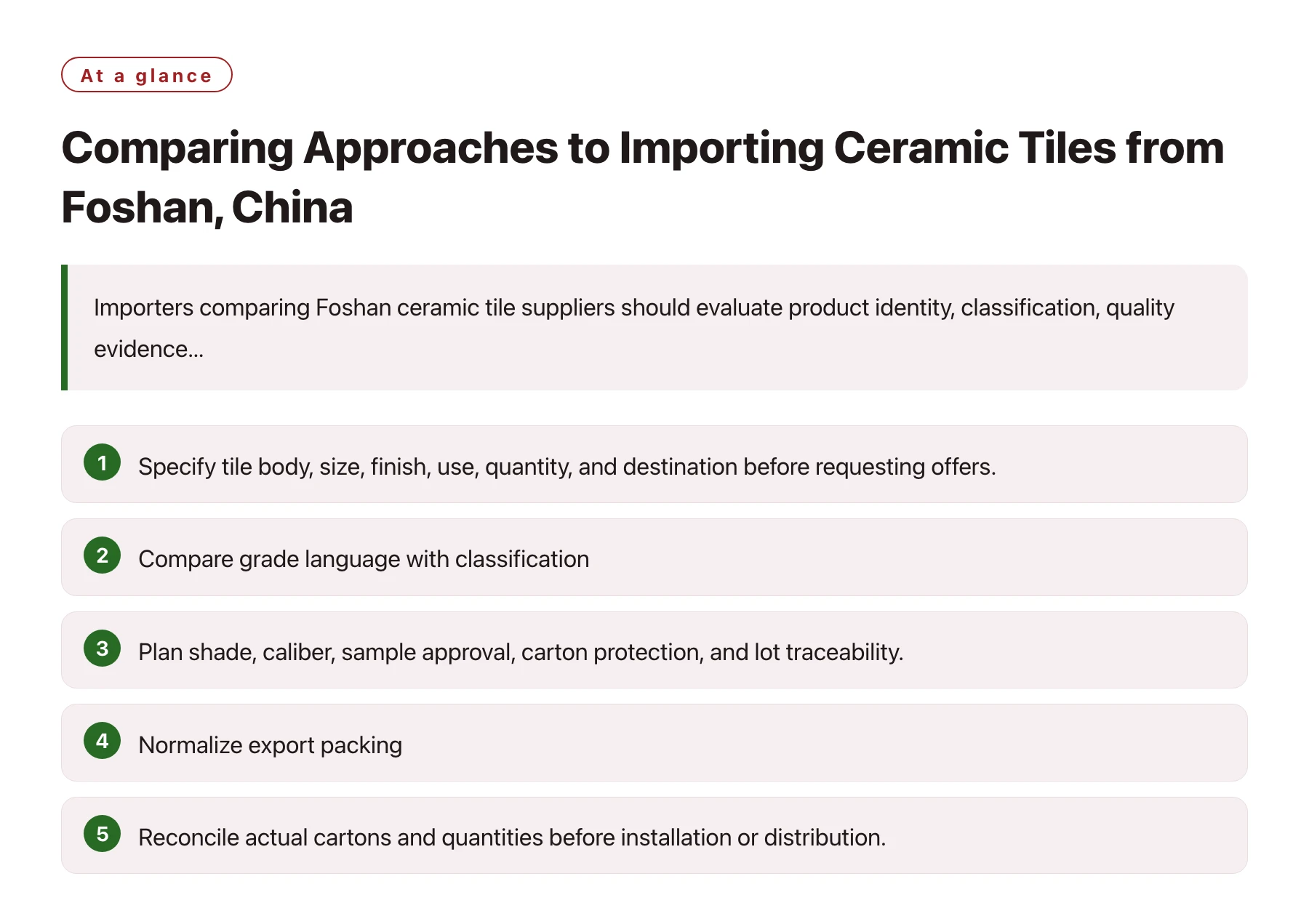
Key takeaways
- Specify tile body, size, finish, use, quantity, and destination before requesting offers.
- Compare grade language with classification, test evidence, and the exact supplier model.
- Plan shade, caliber, sample approval, carton protection, and lot traceability.
- Normalize export packing, transport, insurance, documents, and delivery assumptions.
- Reconcile actual cartons and quantities before installation or distribution.
A reliable import comparison carries the same product and risk assumptions from inquiry through receiving.
1. Define the project and import scope
List tile type, body, size, thickness, finish, color, intended area, quantity, destination, installation date, and receiving location. Identify whether the buyer needs full containers, mixed products, sample quantities, or phased deliveries. Record site access, unloading equipment, storage, and installation sequence. The inquiry should include drawings or schedules and distinguish essential characteristics from aesthetic preferences.
Ask the project designer or technical owner which characteristics and market requirements apply. A decorative sample does not define every performance criterion, and a supplier’s common export package may not match the project. Confirm who will decide technical suitability and who will check destination-specific declarations, labels, and import documents.
2. Compare direct sourcing and coordinated sourcing
Direct sourcing can work when the importer can identify factories, communicate specifications, compare quotes, manage samples, and coordinate quality and logistics. A local sourcing partner may consolidate those tasks, arrange site contact, translate technical details, or track several factories. Compare actual deliverables, named staff, fees, supplier relationships, records, and accountability rather than relying on a service label.
Use one request-for-quotation package with the same sizes, finish, quantities, terms, inspection requirements, and delivery schedule for every candidate. Ask each supplier to list exclusions, minimums, validity, sample cost, and production lead time. If a partner recommends factories, request the evidence behind the shortlist and disclose any commission or supplier relationship that could affect selection.
3. Verify product grade and technical evidence
Request the exact product code, factory, tile body, dimensions, surface, and classification basis. ISO 13006:2018 defines terms and classifications and establishes characteristics and marking requirements for ceramic tiles within its scope; ask how a supplier’s grade label maps to the project specification rather than treating “first quality” or “porcelain” as a complete comparison. [1]
Review reports for sample identity, size, finish, method, result, units, date, laboratory, and limitations. Different characteristics may require separate test methods. A report for a similar body or another factory should not automatically be treated as evidence for the offered tile. Ask a qualified reviewer to resolve mismatches, especially when the tile is for exterior, wet, high-traffic, or regulated applications.
4. Approve samples and manage variation
Obtain samples from the intended source and record model, body, size, surface, color, date, and revision. Compare visual appearance, dimensions, edge quality, finish, and relevant test evidence. Decide whether the sample represents routine production or is a showroom specimen. If possible, examine multiple pieces to understand natural shade variation and sort expectations.
Agree how shade, caliber, batch, and first-quality sorting will be identified on cartons. Ask whether a repeat order may come from a different production run and how the supplier controls variation. Keep an approved reference and require notice before changes to clay body, glaze, size, factory, or packaging. Any deviation should be reviewed and documented by the authorized buyer or designer.
5. Normalize packaging and freight assumptions
Compare carton count, pieces per carton, square metres per carton, pallet dimensions, gross weight, and packing protection. Specify separators, corner protection, wrapping, pallet structure, and handling marks based on tile size and transport route. Confirm whether the price includes export packing, container loading, inland transport, port charges, freight, insurance, and destination delivery. Do not compare an ex-works price with a delivered price as if they were equivalent.
Ask for realistic loading plans and confirm who is responsible for booking, customs paperwork, cargo insurance, and damage claims. Consider container weight, pallet stability, mixed sizes, and how lots are separated. Keep quotations clear about Incoterms edition and named place where used, and have the logistics owner confirm that the term fits the actual route and contract.
6. Plan inspection and loading controls
Set checkpoints for finished goods, carton marks, quantity, visible damage, shade and caliber identification, packaging, and loading evidence. Define the lot, sample method, acceptance rules, inspector role, and report timing. For any required laboratory or specialized test, assign a qualified party. A pre-shipment check cannot establish characteristics that were not measured or reviewed.
During loading, reconcile cartons and pallet totals with the packing list and approved order. Record container identity, visible condition, staged loading, seal number, and any exceptions when included in scope. Keep the shipping weight and carrier submissions with the responsible parties. A supervisor’s photographs can support the buyer’s record but do not replace required transport, customs, or safety documents.
7. Keep export and destination documents aligned
Ask the supplier or forwarder for the document list required for the shipment and market. Confirm invoice, packing list, product description, quantity, origin details, freight documents, certificates, and any technical declarations match the actual goods and destination. Assign a document owner and review deadlines so corrections can be made before vessel cutoff.
If a certificate or declaration names a different model, factory, or product scope, ask for clarification before relying on it. Keep originals and corrected versions with dates. The buyer’s compliance owner should verify destination-specific requirements, including language, labeling, product safety, construction rules, or customs classification where applicable. Do not assume that one market’s document satisfies another market’s obligations.
8. Receive and compare total landed outcome
On arrival, compare carton and pallet counts with shipping documents, inspect visible damage, and check product codes, sizes, shade, caliber, and lot marks before distribution. Record shortage, breakage, wet cartons, mixed lots, and substitutions with evidence. Preserve damaged packaging where a freight claim may depend on it and notify the responsible party within contractual timelines.
Compare actual cost and timing with the quote assumptions: product price, packing, inland transport, freight, insurance, duties, inspection, storage, breakage, and rework. Use the difference to improve the next order forecast. Buyers assessing Foshan ceramic tile grades and packaging can retain a line-by-line comparison from supplier quote through receiving, then select the sourcing model that fits their controls and risk.
Sources
Frequently asked questions
Is direct buying always cheaper for Foshan tiles?
Not necessarily. Compare product scope, local coordination, inspection, packing, freight, claims, and internal staff time. A low ex-works quote may omit costs that another offer includes.
What should be confirmed on a ceramic tile sample?
Record the product code, factory, body, size, finish, color, revision, and date. Review appearance and dimensions, then match any test evidence to the same product and intended use.
Why do shade and caliber matter during tile import?
They help identify production variation and installation fit. Record lot information on cartons, agree how batches will be managed, and avoid mixing shipments without design approval.
What should an importer compare beyond the tile price?
Include sample and test costs, packing, inspection, container loading, inland transport, freight, insurance, duties, storage, breakage exposure, delivery timing, and receiving effort.